
🍕 Fraction Explained
Learn fractions with animated visuals, numerator and denominator, types of fractions, equivalent fractions, comparison tools, quiz, HOTS questions and FAQs.
📌 Learning Map
```🎯 Learning Objectives
- Understand the meaning of a fraction.
- Identify numerator and denominator.
- Recognize proper, improper and mixed fractions.
- Learn equivalent fractions and simple comparison.
🧩 Key Competencies
- Number sense
- Logical thinking
- Visual understanding
- Problem solving
📊 Learning Outcomes
- Explains fractions using real-life examples.
- Labels numerator and denominator correctly.
- Identifies different types of fractions.
- Solves simple fraction questions.
🌈 5W-1H + 1U
🖼️ Fraction Visual Example
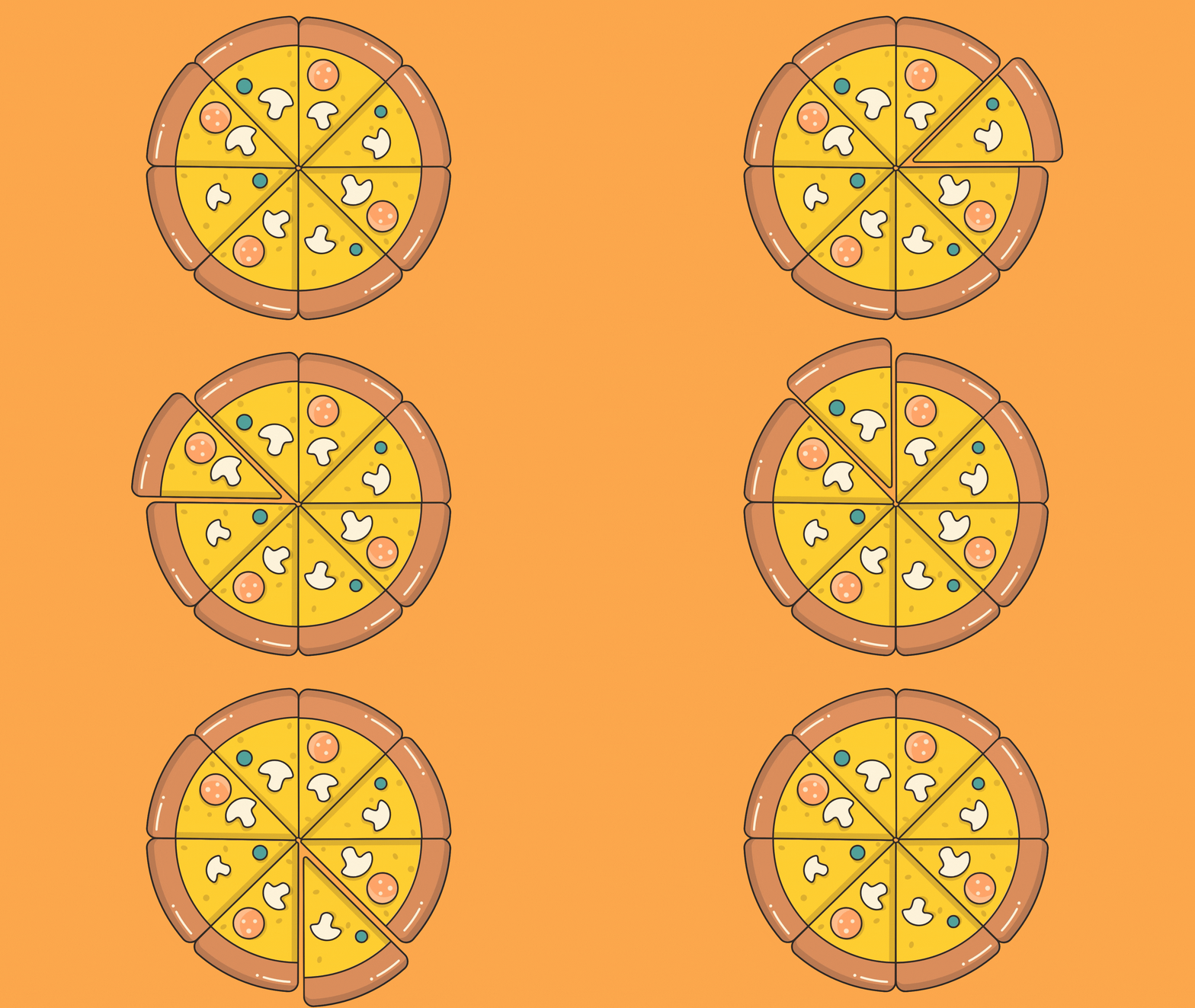
▶ Watch: Fraction Explained
Watch the video lesson and then practise using the visualizer, practice tools and quiz.
```🍕 Interactive Fraction Visualizer
Enter a numerator and denominator to see the fraction as a circle and as a bar.
```Numerator
The numerator tells how many parts are selected.
🧮 Fraction Practice Tools
```Proper Fraction
Numerator is smaller than denominator.
Example: 3/5Improper Fraction
Numerator is greater than or equal to denominator.
Example: 7/4Mixed Fraction
A whole number and a proper fraction together.
Example: 2 1/3Equivalent Fraction
Different fractions that represent the same value.
Example: 1/2 = 2/4Check Fraction Type
Generate Equivalent Fraction
Compare Two Fractions
✅ Fraction Explained Quiz
Select the correct answer and click submit to check your score.
``` ```🧠 HOTS Questions
Click each question to reveal the answer.
```❓ Frequently Asked Questions
```What is a fraction?
A fraction is a number that shows a part of a whole.
What is the numerator?
The numerator is the top number in a fraction. It tells how many parts are selected.
What is the denominator?
The denominator is the bottom number in a fraction. It tells the total number of equal parts.
What is a proper fraction?
A proper fraction has a numerator smaller than the denominator, such as 3/5.
What is an improper fraction?
An improper fraction has a numerator greater than or equal to the denominator, such as 7/4.
What are equivalent fractions?
Equivalent fractions are different fractions that show the same value, such as 1/2 and 2/4.




0 Comments