
Srinivasa Ramanujan and the Magical Number 1729
A taxi ride, a number that looked ordinary, and a brilliant mathematical observation that turned 1729 into one of the most famous numbers in history.
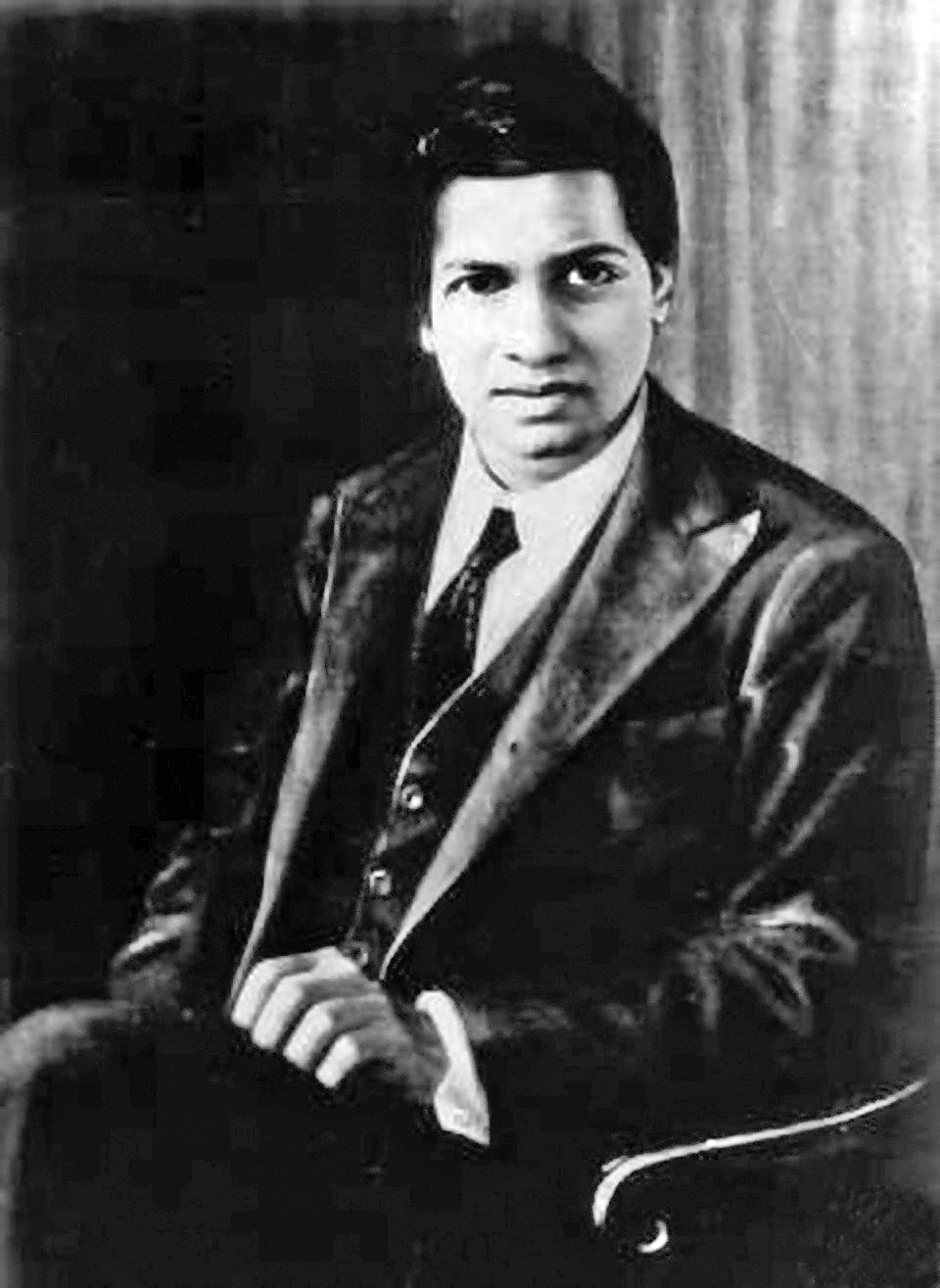
Who was Srinivasa Ramanujan?
Srinivasa Ramanujan was an Indian mathematical genius whose ideas changed number theory, infinite series, continued fractions and the study of partitions. He was born in 1887 in Erode, in present-day Tamil Nadu, and grew up in Kumbakonam. Much of his advanced mathematical learning came from intense self-study.
Ramanujan often saw patterns that other people did not notice. Pages of his notebooks were filled with formulas and identities, many written with little explanation. Some results were already known, some needed correction, and many were completely original. Mathematicians are still studying ideas connected with his work.
Born in India
Ramanujan was born on 22 December 1887.
A life-changing letter
He sent G. H. Hardy a letter containing remarkable mathematical results.
Royal Society
He was elected a Fellow of the Royal Society.
A brief life
He died young, but his mathematical legacy became enormous.
The taxi that carried the number 1729
While Ramanujan was ill in England, the British mathematician G. H. Hardy went to visit him. Hardy had travelled in a taxi numbered 1729. During their conversation, Hardy commented that the number seemed rather dull.
Ramanujan immediately disagreed. To him, 1729 was not ordinary at all. He recognised a beautiful property hidden inside it.
This short exchange became one of the best-known stories in mathematics. It shows how naturally Ramanujan could notice deep number patterns, even during an ordinary conversation.
Why is 1729 so special?
A cube is made by multiplying a number by itself three times. For example, 3 cubed is 3 multiplied by 3 multiplied by 3, which equals 27.
First cube path
13 = 1 123 = 1728 1 + 1728 = 1729Second cube path
93 = 729 103 = 1000 729 + 1000 = 1729Interactive 1729 verifier
Choose a button to reveal one route to 1729, or verify both routes together.
Taxicab(2)
In standard notation, 1729 is Taxicab(2), the smallest positive integer that is a sum of two positive cubes in two distinct ways.
Three prime factors
Another neat pattern is 1729 = 7 multiplied by 13 multiplied by 19.
A digit-sum surprise
The digits add to 19, and 1729 divided by 19 equals 91.
Interactive cube-sum laboratory
Enter any two whole numbers from 0 to 100. The lab will cube them, add the results and show the complete calculation.
Number challenge
Can you find another number that can be written as a sum of two positive cubes in two different ways?
Hint: try the pairs 2 and 16, then 9 and 15.
Reveal the answer
4104 works:
23 + 163 = 8 + 4096 = 4104
93 + 153 = 729 + 3375 = 4104
A short life filled with extraordinary mathematics
Ramanujan's journey was not simple. His intense focus on mathematics affected his progress in other school subjects, and he did not follow the usual university path. Yet his notebooks eventually reached people who recognised that his talent was exceptional.
Birth and childhood
Ramanujan was born in Erode and grew up mainly in Kumbakonam, where he developed a powerful fascination with numbers.
Work at the Madras Port Trust
He worked as a clerk while continuing his mathematical research in his spare time.
The letter to G. H. Hardy
Ramanujan sent pages of formulas to Hardy at Cambridge. Hardy realised that the letter contained work of unusual depth.
Cambridge
Ramanujan travelled to England and began a productive mathematical collaboration with Hardy.
International recognition
He became a Fellow of the Royal Society and a Fellow of Trinity College, Cambridge.
Return to India and lasting legacy
Ramanujan returned to India in poor health and died in 1920. His notebooks continued to inspire generations of mathematicians.
Ramanujan's wider mathematical contributions
The story of 1729 is memorable, but it represents only a tiny part of Ramanujan's work. His research reached across several difficult areas of pure mathematics.
Number theory
He discovered striking relationships involving integers, divisors, primes and modular forms.
Partitions
He worked on ways of expressing a whole number as a sum of positive integers and developed powerful formulas with Hardy.
Infinite series
Some of his series produced remarkably fast ways of calculating values connected with pi.
Continued fractions
He found elegant and unexpected identities involving fractions that continue without ending.
Mock theta functions
Near the end of his life, he introduced mysterious functions that later became important in modern mathematics.
Mathematical intuition
His ability to recognise patterns helped open new paths that later mathematicians made rigorous.
The real magic was not the number alone
Ramanujan's response to Hardy teaches an important lesson: a number may look ordinary until someone asks a better question about it. Mathematics is not only about following rules. It is also about noticing patterns, testing ideas and remaining curious.
Look carefully
Interesting structures can hide inside familiar numbers and everyday situations.
Explore more than one method
1729 reaches the same total through two different cube paths.
Stay curious
A curious mind can turn a taxi number into a mathematical story remembered for generations.
Quick Ramanujan and 1729 quiz
Select one answer for each question. Your result will appear immediately.
1. What makes 1729 famous?
2. Which mathematician visited Ramanujan in the famous taxi story?
3. Which equation is correct?





0 Comments