
Work, Energy, Potential Energy & Kinetic Energy
Learn every important short answer, long answer and reasoning question through interactive explanations, formulas, calculators and quick practice.
Energy Chapter at a Glance
Work is connected to force and displacement. Energy is the capacity to do work. Mechanical energy is mainly studied as potential energy and kinetic energy.
B. Short Answer Type Questions
Tap any question to reveal its answer and explanation.
1. Define Work.
Show Answer
Work is said to be done when a force applied on a body produces displacement in the direction of the force.
Work is done only when both force and displacement act in the same direction.
2. When does a force perform work?
Show Answer
A force performs work when it causes a body to move in the direction of the force.
Force alone cannot do work. Movement must occur.
3. State two conditions when no work is done by a force.
Show Answer
- No force acts on the body.
- The body does not move despite the force acting on it.
Without force or without displacement, work done is zero.
4. In which of the following cases is work being done?
Show Answer
- Boy pushing heavy rock – No work (if rock does not move)
- Boy climbing stairs – Work is done
- Coolie standing with a box – No work
- Girl moving on the road – Work is done
Work is done only when displacement occurs.
5. Write the expression for work done.
Show Answer
W = F × d
Where,
- W = Work Done
- F = Force
- d = Displacement
Work equals force multiplied by displacement.
6. State the SI unit of work and define it.
Show Answer
SI unit of work is joule (J).
One joule is the work done when a force of 1 N moves a body through 1 m in the direction of the force.
1 J = 1 N × 1 m
7. State two factors on which work done depends.
Show Answer
- Magnitude of force.
- Distance moved in the direction of force.
Greater force or greater displacement produces more work.
8. Define Energy.
Show Answer
Energy is the capacity (ability) to do work.
Energy enables an object to perform work.
9. State the S.I. unit of energy.
Show Answer
The S.I. unit of energy is joule (J).
Both work and energy are measured in joules (J).
10. Define 1 joule of energy.
Show Answer
One joule of energy is the energy possessed by a body capable of doing one joule of work.
1 joule of energy enables a body to perform 1 joule of work.
11. How is work related to energy?
Show Answer
Energy is measured by the amount of work done. Work done on a body equals the energy gained by it.
Work transfers energy from one body to another.
12. What are the two kinds of mechanical energy?
Show Answer
- Potential Energy
- Kinetic Energy
Mechanical energy is of two types: Potential Energy and Kinetic Energy.
13. What is potential energy? State its unit.
Show Answer
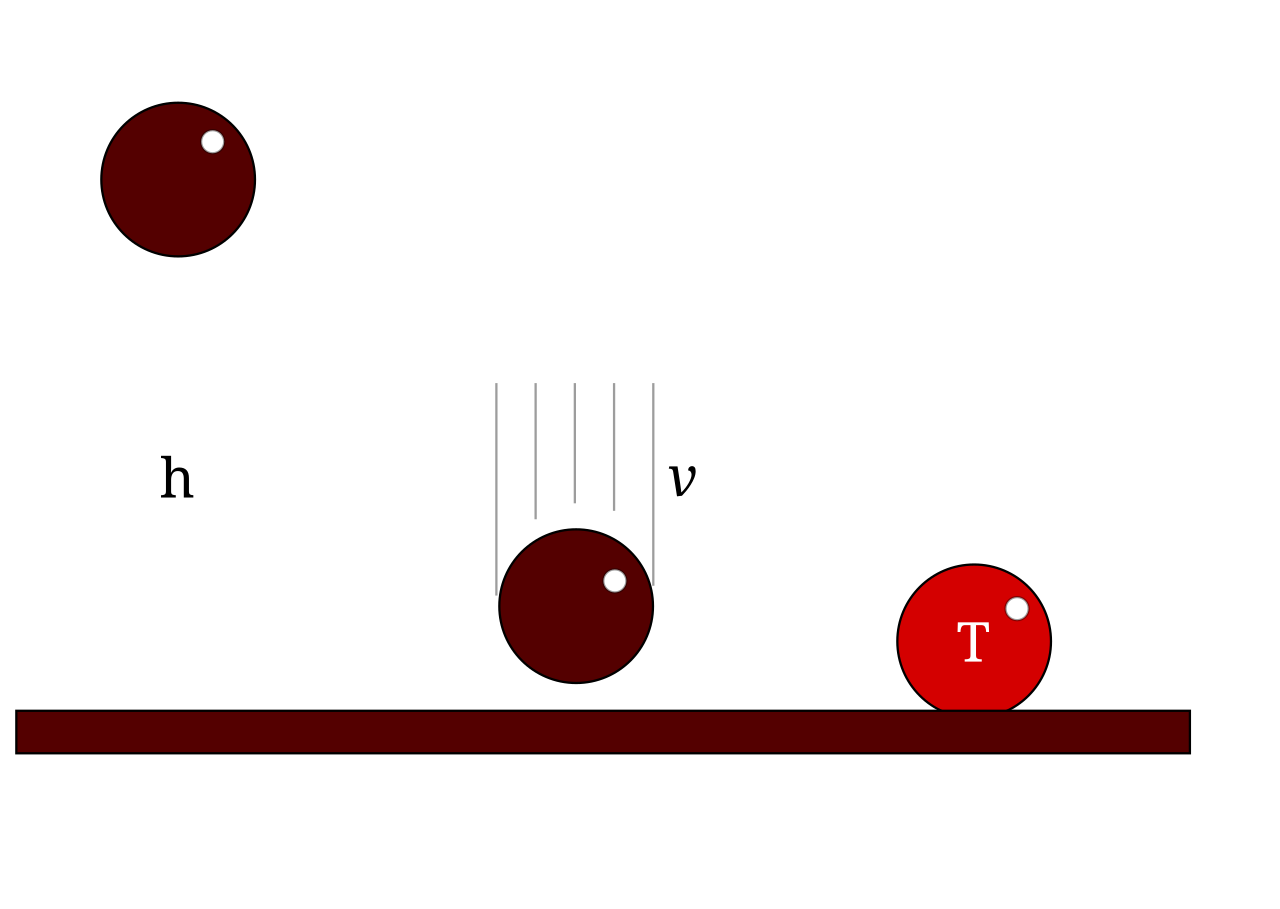
Potential energy is the energy possessed by a body due to its position or state.
Unit: joule (J)
A raised or stretched object stores potential energy.
14. Give one example of a body that has potential energy.
Show Answer
- Water stored in an overhead tank.
- A stretched rubber band.
Potential energy may be due to height or stretching.
15. Which bucket has greater potential energy?
Show Answer
The bucket kept on the second floor has greater potential energy because it is at a greater height.
Potential energy increases with height.
16. Write the expression for gravitational potential energy.
Show Answer
P.E. = mgh
Where,
- m = mass of the body
- g = acceleration due to gravity
- h = height above the ground
Gravitational potential energy depends on mass, gravity and height.
17. Define kinetic energy. Give one example.
Show Answer
Kinetic energy is the energy possessed by a body due to its motion.
Example: A moving car.
Any moving object possesses kinetic energy.
18. State two factors on which kinetic energy depends.
Show Answer
- Mass of the body.
- Speed (velocity) of the body.
Kinetic energy increases with both mass and the square of speed.
19. Two toy cars A and B of masses 200 g and 500 g move with the same speed. Which has greater kinetic energy?
Show Answer
Car B (500 g) has greater kinetic energy because kinetic energy is directly proportional to mass.
For the same speed, the heavier object has greater kinetic energy.
20. A cyclist doubles his speed. How will his kinetic energy change?
Show Answer
The kinetic energy becomes four times because K.E. ∝ v².
If speed doubles, kinetic energy becomes 2² = 4 times.
21. Write the expression for kinetic energy.
Show Answer
K.E. = ½ mv²
Where:
- m = mass of the body
- v = speed of the body
This is the standard formula for kinetic energy.
22. A ball of mass m is moving with speed v. What is its kinetic energy?
Show Answer
K.E. = ½ mv²
Substitute the values of mass and speed into the formula.
23. Name the form of energy stored in a wound-up spring of a watch.
Show Answer
Elastic Potential Energy.
A stretched or compressed spring stores elastic potential energy.
24. Name the type of energy possessed by the following.
Show Answer
| Object | Energy |
|---|---|
| Moving cricket ball | Kinetic Energy |
| Stone at rest on top of a building | Potential Energy |
| Compressed spring | Potential Energy |
| Moving bus | Kinetic Energy |
| Bullet fired from a gun | Kinetic Energy |
| Water flowing in a river | Kinetic Energy |
| Stretched rubber band | Potential Energy |
Moving objects possess kinetic energy, while raised, stretched or compressed objects possess potential energy.
C. Long Answer Type Questions
Detailed concept-based answers for examination preparation.
1. State two factors on which potential energy depends.
Show Answer
- Mass of the body.
- Height of the body above the ground.
2. Two bodies A and B have masses 10 kg and 20 kg at the same height. Which has greater potential energy?
Show Answer
Gravitational potential energy is given by P.E. = mgh.
Since both bodies are at the same height and experience the same value of g, potential energy depends only on mass. Therefore, Body B (20 kg) has greater potential energy.
3. A body of mass m is moved from the ground to a height h.
Show Answer
Force = mg
(b) Work doneWork Done = Force × Distance = mg × h = mgh
(c) Potential energy storedPotential Energy = mgh
4. Can a body possess energy even when it is not in motion?
Show Answer
Yes. A body at rest can possess potential energy due to its position or state.
5. Give an example showing conversion of potential energy into kinetic energy.
Show Answer
A stone dropped from a height converts its potential energy into kinetic energy while falling.
6. State the energy changes in a wound-up spring while it unwinds.
Show Answer
Elastic Potential Energy → Kinetic Energy
D. Think and Answer
Reasoning questions that connect physics to real situations.
1. A coolie is moving with luggage on his head. Does he perform work against gravity?
Show Answer
Answer:
No. The displacement of the luggage is horizontal, whereas the force of gravity acts vertically downward. Since displacement is perpendicular to gravity, no work is done against gravity.
2. The Moon revolves around the Earth. How much work is done by gravity?
Show Answer
Answer:
Zero. Gravitational force acts towards the centre of the Earth, while the Moon's instantaneous displacement is perpendicular to the force. Hence, no work is done by gravity.
3. Give reasons for the following.
Show Answer
(a) No work is done in pushing a wall.
The wall does not move, so displacement is zero. Therefore, no work is done.
(b) A hammer drives a nail into wood.
The hammer applies force and the nail moves into the wood. Hence, work is done.
(c) A horse has more kinetic energy than a dog at the same speed.
Kinetic energy depends on mass. Since a horse has greater mass, it possesses more kinetic energy.
(d) A teacher moving around the classroom is doing work, but not on the child.
The teacher moves and does work on herself. The child does not move, so no work is done on the child.
4. Name the form of energy into which potential energy can change.
Show Answer
Answer:
Potential energy can be converted into kinetic energy.
5. Is it practically possible to convert one form of energy completely into another useful form?
Show Answer
Answer:
No. In every energy conversion, some energy is always lost as heat, sound or other forms. Therefore, complete conversion into useful energy is not practically possible.
6. Standing on an escalator, is a person doing work?
Show Answer
Answer:
No. The escalator moves the person without the person applying a force to produce the motion. Therefore, the person does not do any work.
Interactive Energy Calculator
Select a formula, enter the values and calculate the result.
Quick Concept Check
Choose an answer and get instant feedback.
1. A moving car possesses which form of energy?
2. If speed doubles, kinetic energy becomes:
3. The SI unit of energy is:
Watch the Lesson
Use this video to revise the ideas of work and energy visually.
Follow the Visual Revision
Explore related Speed Up Science posts on Instagram.
View this Speed Up Science post on InstagramA post shared by Speed Up Science (@speedupscience_)
View this Speed Up Science post on InstagramA post shared by Speed Up Science (@speedupscience_)
Frequently Asked Questions
Quick revision answers for the Energy chapter.
What is work in physics?
Work is done when a force causes displacement in the direction of the force. For a constant force parallel to displacement, W = F × d.
What is the SI unit of work and energy?
The SI unit of both work and energy is the joule, written as J.
What is the difference between potential energy and kinetic energy?
Potential energy is stored because of position or state, while kinetic energy is possessed by an object because of its motion.
What is the formula for gravitational potential energy?
Gravitational potential energy is P.E. = mgh, where m is mass, g is acceleration due to gravity and h is height.
What is the formula for kinetic energy?
Kinetic energy is K.E. = ½mv², where m is mass and v is speed.
Can work be done when there is no displacement?
No. If displacement is zero, mechanical work done by the force is zero.





0 Comments